The Meru Four Days Hike is a thrilling adventure that takes trekkers to the summit of Mount Meru, the second highest mountain in Tanzania. This challenging yet rewarding trek offers stunning views of the surrounding landscapes and wildlife encounters within the Arusha National Park. The itinerary includes gradual acclimatization, diverse terrain, and a chance to summit Socialist Peak at sunrise on the third day before descending leisurely back to the starting point, providing an unforgettable experience for hikers seeking a unique and immersive mountain adventure.
Crater Lake Game Sanctuary Naivasha — Kenya
(Crater Lake Game Sanctuary is located 10 kilometers from Naivasha town and about 90 km from Nairobi. This is a small private sanctuary centred around a volcanic crater lake with spectacular green water. The lake attracts many flamingo, and the surrounding forests and plains have plenty of game. This is a good place to explore on foot.)
Crater Lake Game Sanctuary Naivasha is a green soda lake at the bottom of an extinct volcano on the western side of Lake Naivasha and north of the village of Kongoni, with many trails including one for hikers along the steep but diminutive crater rim.
Crater Lake Game Sanctuary nature trails lead through the vegetation around the crater with plenty of wildlife including over 170 species of birds. Besides the impressive 170 bird species recorded here, giraffes, zebras and other plains wildlife are also regular residents. While walking, remember that buffaloes lurk in the woods.Crater Lake Game Sanctuary is less than one hour drive from Naivasha, partly over a very dusty dirt road. Like Hell’s Gate National Park it is allowed to explore this Park on foot.
The tiny jade-green crater lake is held in high regard by the local Masai, who even believe its water helps soothe ailing cattle. The volcanic crater is also home to Colobus monkeys and flamingos.Tucked away in a hidden corner of Kenya’s Great Rift Valley is Crater Lake Camp. Crater Lake Camp offers a stirring encounter with wild Africa, just ninety minute’s drive from downtown Nairobi.
This magical lakeside camp is the perfect stopover en- route to the Nakuru and the Masai Mara game parks, as well as a romantic getaway by itself! Crater Lake Game Sanctuary is 10,000 acres and houses the famous hilltop grave where Happy Valley’s tragic heroine, Lady Diana Delamere, is buried with her last two husbands, Gilbert Colvile and Thomas Delamere.
For the truly intrepid, there are the mysterious ‘Caves of God’ in the golden wheatfield’s of Ndabibi, reputed to be an inspiration for H. Rider Haggard’s Allan Quartermain. Crater Lake Game Sanctuary Crater Lake Game Sanctuary Crater Lake Game Sanctuary, Crater Lake Game Sanctuary Naivasha Animals & Birds.
Crater Lake Game Sanctuary is great fun to explore on foot independently or with a local guide. This area is alive with hundreds of species of birds and many mammals, large and small. While walking through the conservancy you can spot gazelle, giraffe, zebra, eland, baboon and black and white colobus monkeys – just to name a few.
You can also take the short walk to the rim of the beautiful volcanic crater with views down to the emerald-green lake in the crater. Depending on the water levels of other Rift Valley lakes, there are sometimes large populations of flamingoes on the lake.
Crater Lake Game Sanctuary a haven for Greater and Lesser Flamingos, Little Grebes, Cape Teal and Ruff’s, Great White Pelican, Whiskered Tern, Maribou, Grey and Black-headed Heron, African Fish Eagle, Yellow-billed Storks, Pied Avocets, Egyptian Geese etc.
Crater Lake Game Sanctuary Naivasha Highlights
* Bird walks
* Stargazing
* Horse riding
* Night drives
* Historical tours
* Boating on the lake
* Absolutely nothing
* Escorted game walks
*Crater rim sundowners
* Candlelit “lake dinners”
Included
General
Food
Other
Included
General
Food
Other
Not-Included
WELCOME
BEST THINGS TO KNOW BEFORE CLIMBING MOUNT MERU
You are looking to do your Mount Meru Climb? It doesn't matter whether you are climbing Mount Meru in preparation for big brother Kilimanjaro or you just want to tick the 5th highest peak of Africa of your list. Mount Meru in Tanzania is marvelous. Kilimanjaro is the popular guy in school but Mount Meru may well be way too cool for school. Mount Meru is a highly underrated mountain and if you want to climb a mountain in true African style, then you would be very happy climbing Mount Meru. In this blog post, we answer the most important questions for your Mount Meru climb. Also, we speak to Manase who has climbed Meru a few times and gather some insights and tips from him.
When you climb Kilimanjaro, you are not going to see any wildlife. This is something that people only realize when they are already on their way to the rainforest on the lower slopes of the Roof of Africa. There is no wildlife on or around Kilimanjaro. Sure, some monkeys and snakes, but you are not going to see giraffe, elephant or buffalo. That is a completely different story on Kili's little brother, Mount Meru. Your trek to Socialist Peak will be packed with wildlife.
Check all our options for climbing Mount Meru.
There are so many options for climbing Mount Meru of Arusha in Tanzania. These options are as shown here below;
Is Mount Meru in Tanzania or Nepal?
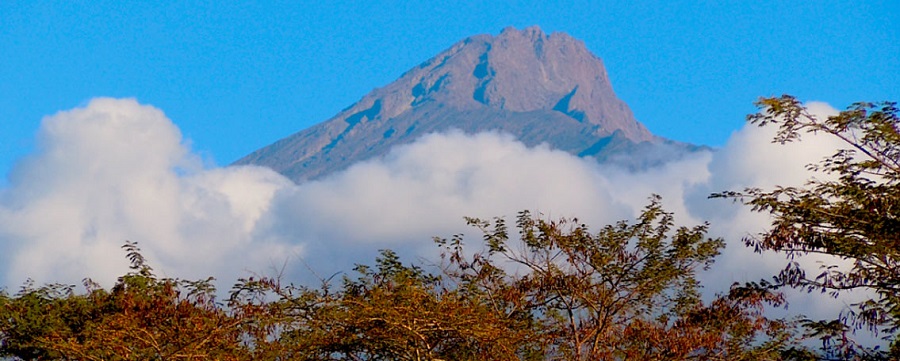
When you're talking about Meru your either talking about a mountain in Africa or in Nepal. Talking about Africa then Mount Meru is a dormant stratovolcano located 70 kilometers west of Mount Kilimanjaro in the country of Tanzania. At a height of 4,562.13 meters (14,968 ft), it is visible from Mount Kilimanjaro on a clear day and is the fifth-highest mountain in Africa.
Why climb Mount Meru (Tanzania)?
Godfrey Ngaiza of Africa Natural Tours L.t.d has climbed Mount Meru a few times and he always enjoys doing it again. "I love Mount Meru. It's much easier to climb the mountain, the huts are well equipped and you can do it in a long weekend if you want to." When you are climbing Mount Meru, you are likely to see a lot of wildlife. "That's right," says Godfrey. "Mount Meru is situated in Arusha National Park and that comes with a lot of wildlife. That is why we would never send you on to the mountain without an armed ranger. Arusha National Park may not be the place to spot all of the Big Five, but you will see elephants, giraffe, zebra and lots of buffalo. Even at an altitude of 3500 meters, you can still see buffalo." Although leopard and cheetah are rare in Arusha National Park, there is a chance to spot those as well. You could also come across a hippo. The armed ranger is joining you on the climb to make sure that you will not be negatively surprised by any of the wildlife in the park and on the mountain. Although you can also see wildlife on Mount Kenya, it is pretty unique to be climbing a mountain in the middle of all the wildlife. This is one of the reasons why climbers like Mount Meru so much more than Kilimanjaro. In Kilimanjaro National Park the chances of seeing a lot of wildlife are slim.
Should I climb Mount Meru or Kilimanjaro?
If you have the time, you should climb both. But if you have to choose, which one would you go for? Mount Meru might not ring a bell to everyone, but if you have climbed Kilimanjaro, everyone will be listening to you when getting together for a birthday party. People will ask, did you see any elephant? No, you didn't. If you have climbed Mount Meru, it is likely that you will have seen Mount Meru. "That is so cool about Mount Meru,"
Although Mount Meru has a lot of drawcards, "I prefer Kilimanjaro of course. There are so many different climbing routes. That makes Kilimanjaro different every time. Mount Meru is exciting as well and I like to come back for more everytime, but it is always the same way up and down to Little Meru and Socialist Peak. Get the best of both, and combine the two."
Mount Meru in combination with Mount Kilimanjaro
Socialist Peak on Mount Meru is 4,562 m high and Uhuru Peak on Mount Kilimanjaro is 5,895 m high. The mountains are just 70 kilometers apart, so you can easily combine them. Climbing Mount Meru will help you with your acclimatization, "It is a fantastic mountain to get used to climbing to high altitude in Tanzania. If you have the time, we can definitely recommend climbing Mount Meru before your attempt to climb Mount Kilimanjaro. And why not? Within two weeks you can climb the highest and the fifth highest mountain in the world and you don't even need to travel extra for it." More and more people are making the choice to combine Mount Meru with the Roof of Africa. It is not only a great acclimatization for climbing Kilimanjaro. It also gives you some time to get used to climbing in Tanzania.
"People tend to rush to Mount Kilimanjaro. They arrive the day before their climb and already leave the country the day after. There is more to do and see in and around Moshi. Mount Meru allows you to see Arusha National Park, soak up some real African spirit by seeing wildlife and making more of your holiday. *
What is the best season to conquer Mount Meru?
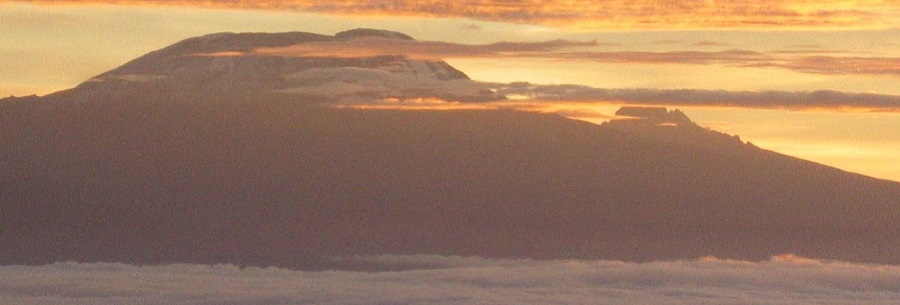
You can climb Mount Meru all year round. The huts are comfortable, you won't need to camp in the rain and it is not as cold as for example on Kilimanjaro. Of course, there's a best season for everything. The best season for your Mount Meru climb is between June and February with December to February being the best months for the best views of Kilimanjaro.
What to Pack for your Mount Meru climb?
When you are preparing for your Mount Meru climb it is important to have the right bags, the right clothes, the right shoes or boots, the right gloves, the right headwear, the right sleeping bag, and all the extras. If you are spending some extra time in Moshi or Arusha, then you can buy a lot of gear there, but don’t push your luck. Don’t overpack, don’t bring jewelry, don’t bring a classic towel, jeans, or cotton t-shirts. For Mount Meru, you can stick to the same packing list as for when climbing Kilimanjaro. You can find a packing list here.
What is the accommodation like while climbing Mount Meru?
Accommodation on Mount Meru is really comfortable, It is way more comfortable than the huts on the Marangu Route on Kilimanjaro. There is electricity to charge your phone and camera, there are decent latrines. Trekking on Mount Meru is really comfortable."
Miriakamba Huts
The Miriakamba Huts, where you will stay for the first night are easily reached with 4x4 vehicles. This hut has rooms which can fit 4 people and there are comfortable bunks and well-equipped bathrooms.
Saddle Huts
You will stay at Saddle Hut the night before your push to Socialist Peak at 3500 meters. These huts are a bit more basic but have all the amenities which you also find at Miriakamba Huts. Even here, you can still encounter buffalo and other game.
How do I prepare for my Mount Meru climb?
Fair enough, Mount Meru isn't Kilimanjaro. But if it wouldn't be standing next to Kilimanjaro, it probably would have gotten a lot more credit than it is getting now. Mount Meru is 4,565m high and the fifth highest peak of Africa. You can climb Mount Meru to warm up for your Kilimanjaro ascent, but don't think that Mount Meru is a walk in the park. You will need decent fitness when you want to do a Mount Meru climb. Take note of the following:
Aerobic fitness: You best get moving as soon as you have your mindset on your Kilimanjaro climb. With the right aerobic fitness, you will have an improved heart rate, healthy muscles, and great lung capacity. Do power walking, running, hiking, trekking, cycling and/or swimming. Don’t worry. you don’t need to train for a marathon. One hour, 3 to 4 times a week is plenty of exercise.
Endurance: When you are comfortable doing exercise a few times a week, you can fire it up by doing some longer sessions. The best thing you can do is walking long distances, at least once a week. If you can hike comfortably for a prolonged time, you are good to go.
Gear: Don’t use your backpack and shoes that you purchased for your Kilimanjaro climb for the first time after your land. Break them in and use this equipment when you are working on points 1 and 2.
Altitude: If you can, you can mimic the altitude by hiking and trekking in the hills and mountains. If you do not live in the right area for that, then don’t panic. The first two points are most important.
What is a good itinerary for climbing Mount Meru in Tanzania?
If you want to climb Mount Meru, you ideally do it in 1 day hike , 3 days and 4 days. This will give you enough time to soak up the beauty of the mountain while at the same acclimatize and minimize the risks of altitude sickness.

Should I tip the guide after my climb?
Just as tipping is normal when climbing Kilimanjaro, tipping is also expected when you are climbing Mount Meru. You can make a difference in the livelihoods of your support staff, your ranger, your cook and your porters. A good tip will be appreciated. Your tip of between 80 and 120 EUR for the climb will be split amongst the crew. This equals about 90 to 130 USD. Your staff looks after you, make sure to also look after them.
How much does climbing Mount Meru cost?
There are several options when looking for your Mount Meru Climb. You can either climb Mount Meru in three or four days. Although you will be fine in three days, you ideally tackle the little brother of Kilimanjaro in four days. This will help your acclimatization and this way you will make most of your climbing experience. You can do a three climb for 700 to 900 EUR or 800 to 1000 USD. A four-day climb can be done for 800 to 1000 EUR or 900 to 1100 USD. You can combine Mount Meru with climbing You can compare all the different options for your Mount Meru climb right here.
Where to book your Mount Meru climb?
The great thing about the internet is that you can find anything anywhere. The same goes for hiking and trekking providers. However, since there is so much on offer, it can be overwhelming to find a trekking operator of your liking.
Climb Mount Meru to Prepare for Kilimanjaro
With the above said, Meru is of course a great way to prepare for Kilimanjaro as it gives you a little taster as to what to expect on the bigger mountain.
The most important thing Meru prepares you for is altitude acclimatization. Do not underestimate Meru as it is a challenging climb! It is certainly high enough to bring on altitude sickness. At a height of 4,566m, Meru is a tall mountain in its own right and forces your body to make changes to adapt to the altitude. Please click here for a full guide on how to deal with acclimatization.
Not only this, but like Kilimanjaro, you travel in a group with porters carrying your gear and move up through several vegetation zones in 1 day. Similar to Kilimanjaro, you trek the summit at night, reaching the peak just before sunrise. You then descend an amazing 2000m on the same day! All these similarities allow your body (and your mind) to prepare for Kilimanjaro.
Climb Mount Meru – The Route
Unlike Kilimanjaro, there is only one official route to the summit of Meru – the ‘Momella route’. Although there is a 3-day (8.7 mile) option, we discuss the longer, more popular 4-day (11.8 mile) climb. Generally, we recommend climbing between June and February with December to February being the best months for clear views of Kilimanjaro.
Day by day Momella route itinerary
Day 1 – Momella Gate to Miriakamba Hut
Elevation – 1500m to 2500m. Time: 3 – 4 hours. Habitat – Montane Forest.
Most tour operators will collect you from your hotel in the morning and take you to Arusha National Park. Once at headquarters your papers, visa and permits will all be checked and made ready for departure. From head office you will be taken by van to the Momella Park Gate from where your trek will begin. The trail starts by winding its way through montane forest where you will see waterfalls, wildlife and some pretty oddly formed trees! Remember, an armed national park ranger will accompany you on your route. The first day of trekking will end when you reach Miriakamba hut. Unlike Kilimanjaro, accommodation on Meru consists of huts dotted up the mountain.
Day 2 – Miriakamba Hut to Sadlle Hut
Elevation – 2500m to 3550m. Time: 3 – 4 hours. Habitat – Moorland
On the second day you will ascend over a 1000m to Saddle Hut at 3,550m. The air will get cooler and you may feel slightly more out of breath as the air gets thinner. Saddle Hut will be reached by early afternoon which will give you time to visit ‘Little Meru’ at 3,820m. Not only will you get great views of Kilimanjaro, but it’s a good way for your body to acclimatize to the altitude.
Day 3 – Saddle Hut to Socialist Peak to Miriakamba Hut
Elevation – 3550m to 4256m to 2500m, Time: 8 – 10 hours. Habitat – Semi Desert, Alpine Desert, Montane Forest.
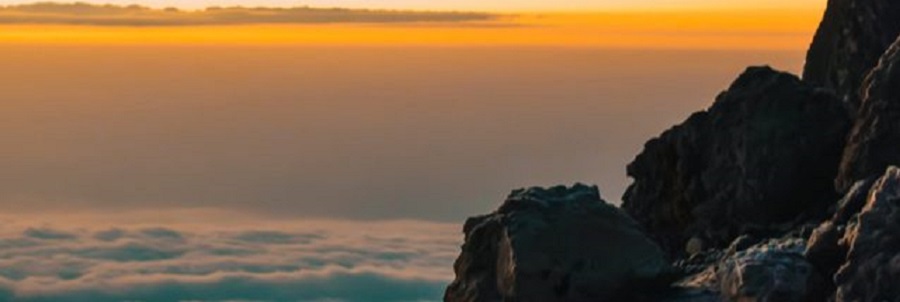
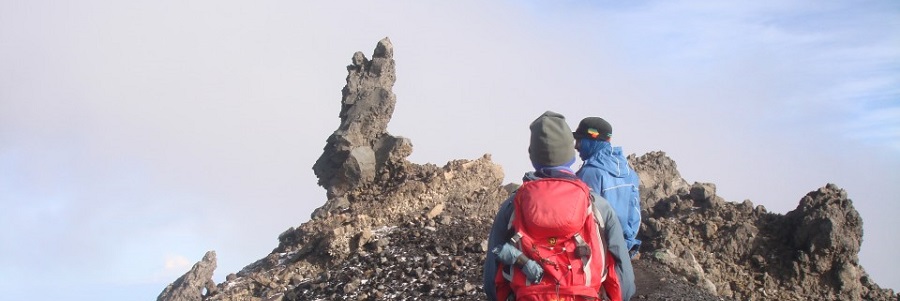
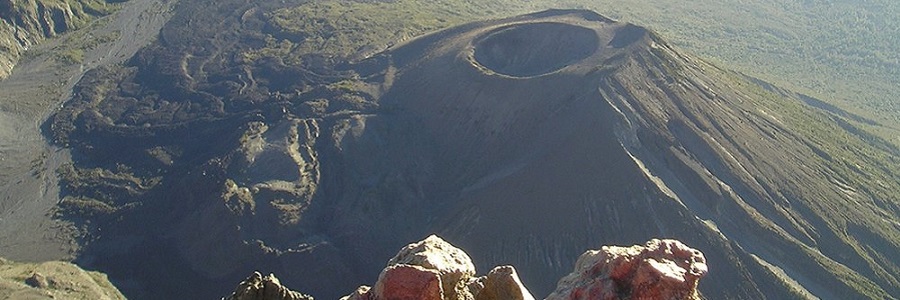
Your summit ascent begins in the middle of the night at 2am. Following a quick midnight snack you trek to 3,820m where you find Rhino Point. After a quick break you then climb a further 4-5 hours where, towards the top, you will traverse the exhilarating and very narrow crater rim path! This is all rewarded as you hit the summit just before sunrise. The 360 degree views are spectacular, especially the sun rising over Kilimanjaro! Before your descent you can explore Meru’s ash cone within the crater.
Day 4 – Miriakamba Hut to Momella Gate
Elevation – 2500m to 1500m. Time: 2 – 3 hours. Habitat – Montane Forest
The fourth day is an easy going few hours down through the montane forest area where you will once again see wildlife and beautiful habitat. Seeing the forest from above is a completely different experience to seeing it on the way up – look out for birds!
Recommended Tour Operators
Still haven’t booked your Mount Meru trek yet? Click here for our personal recommendations.
Packing List
Click here for our complete kit list recommendations.
FAQ
If you still have any questions then please feel free to leave a comment in the section below and we will get back to you as soon as possible.
Climb Kilimanjaro for Charity: Find A Worthy Cause
As the Web's #1 information resource on climbing Kilimanjaro, we recently put together this page to help prospective climbers, like yourself, find the cause closest to your heart to support.
Please Note: We are not a tour operator and do not run charity Kilimanjaro climbs. Please contact the charities directly for further information.
Are you a charity with a Kilimanjaro climb challenge?
Contact us to be included on this Climb Kilimanjaro for Charity page.
Mount Meru Climb
Magnetized by Mt Kilimanjaro, the hikers often overlook Mt Meru, the second highest peak of Tanzania. Towering over Arusha National Park, Mount Meru offers both an excellent warm-up exercise for Kilimanjaro, in addition to being a stunning trekking experience in the wild by its own right.
Mount Meru trekking is a real adventure. The slopes of this dormant (yet active - the last eruption was in 1910) volcano offer fascinating panoramic vistas and bustling wildlife around.
This volcano was “born” around 500,000 years ago, and it’s very first eruption virtually exploded its eastern side, creating its, peculiar appearance. In addition to that, Mt Meru has one of the deepest craters - over 1,500 meters!
Why Climb Mount Meru
There are several reasons to include Mount Meru into your Tanzania adventures list. Regrettably, this volcano is often out shadowed by Kilimanjaro - located in the immediate vicinity, it attracts more international hikers, thus making it a secondary hiking destination or a warm-up exercise. The majority of hikers, however, ignore it altogether.
We at Africa Natural Tours firmly believe that Mt Meru hiking is a great adventure by itself because of these reasons:
Reason 1 - Stunning scenery
Mount Meru features incredibly captivating scenic vistas. The trek to Socialist Peak (4566 m/14,980 f), traverses several climatic zones, offering diverse landscapes and unparalleled scenes for wildlife photography.
The views from the summit area of Mt Meru are truly rewarding - valleys, forests and meadows, all buried in lush verdure, and magnetizing view of the Kilimanjaro peak looming on a horizon will surprise even the most seasoned travelers.
Reason 2 - Rich wildlife
Nestled in Arusha National Park, Mount Meru is one of the few mountains of the world still densely inhabited by the wildlife, which freely roam on its slopes. The hikers are likely to experience multiple encounters with different animals, including buffaloes, antelopes, monkeys, giraffes and, with some luck in your pocket, even elephants.
Reason 3 - No crowds
Meru is not yet popular among hikers. During the high season, on the popular routes of Kilimanjaro (Marangu and Machame) there is a chance of “traffic jams”, something that you will never experience on the trails of Meru. For those who are seeking reclusive, tranquil hiking in the wild, Meru is a great choice.
EXCELLENT PREPARATION FOR KILIMANJARO Climbing Mount Meru is by far the most proven way to gain acclimatization for your Kilimanjaro adventure. As we explained in our article about the importance of high altitude acclimatization, it is the adaptation of your body to the heights (not your physical strength and stamina) that is critical for the Kilimanjaro success. Practically, the longer you stay at high altitudes, the better your body adapts. Thus, hiking Meru before Kilimanjaro is a good extra acclimatization boost for you, hugely elevating your Uhuru chances! In addition, Mt Meru trekking gives good insights into what it takes to be a member of a true mountain expedition. A minor of version of Kilimanjaro, it gives a glimpse into the “main mount” challenge, showing you what the future adventure will be like.
Reason 4 - Mount Meru hiking tour is affordable
In contrast to other hiking adventures, Mt Meru climb is quite an affordable activity. Because no tents are necessary (overnight stays on Mt Meru are in huts), the number of crew is small, reducing the travel costs. Therefore, for those with shrinking budgets, Meru can become a good and affordable alternative.
Reason 5 - Excellent addition for the safari tour
The wildlife of Tanzania is what attracts most of the visitors to the country. Tanzania has been voted the best destination for wildlife viewing several years in a row.
At the same time, flying over half of the world surely justifies having more diverse experiences. Thus, pairing your safari tour with a Meru climb may be an excellent idea to get the best of Tanzania.
Mount Meru Expedition - Essential points
The key features of Mt Meru expedition:
You do not need special alpine skills or experience to take part.Together with Kilimanjaro, Mount Meru is a “hiking”, not climbing “mountain”. Neither ropes, nor ice axes or helmets are necessary - the trekkers reach the Socialist Peak (4,562 m/14,967 f) on foot, and for the majority of them, Mt Meru is the first mountaineering experience.
Ordinary fitness level is ok. Meru hiking does not require anything special - as long as you can comfortably walk up to 10 km/6 miles per day, you can do it. Trekking level there is moderate.
Acclimatization to altitude is important! Do not take it lightly - the altitude of Mt Meru is serious enough to be the cause of altitude sickness. Follow these fundamental rules acclimatization:
- Hike slowly (recommended pace is two times slower than your ordinary one)
- Drink much water (3-4 liters per day)
- Listen to your guide
- Do not drink alcohol or too much coffee
The crew will take care of everything. Under the TANAPA (Tanzania National Parks Authority), a qualified guide should accompany the hikers. The team of porters and cooks are responsible for carrying your luggage, camp organization, food preparation, etc.
CLIMBING STANDARDS AT Africa Natural Tours we believe that it is the crew that makes your adventure a lifetime experience. All our guides and porters are hand-picked, individually trained professionals. The guides have Wilderness First Responder/Wilderness First Aid certifications. They know how to act in times of emergency and how to make your experience with Africa Natural Tours a lifetime adventure.
Under the local customs, in order to promote employment, half of the porters crew should be hired from the Meru tribe, which live in the foothills of Mount Meru.
Overnight stays on Mount Meru are in huts only. In contrast to Kilimanjaro, where tented camping options are available on all routes but Marangu, on Mount Meru one should be ready to stay in huts only.
An armed ranger will be accompanying your party up to the summit camp. In order to make your stay in the wild safe and protect the animals from poachers, an armed ranger will be hiking with you up to Saddle Hut Camp (see itinerary below).
Mount Meru Climb - day-by-day itinerary
There is only one route leading to Socialist Peak - “Momella”. Three- and four-day hiking are available
3-DAY VS. 4-DAY HIKE - HOW TO CHOOSE? If the schedule allows and you have not gained acclimatization on other mountains before (meaning that you have successfully climbed anything above 4,000m/13,123f and did not get affected by altitude sickness), we always recommend choosing a longer option. The more time you spend on Mount Meru - the more effectively your body adapts to the altitude, making the whole experience less stressful for it.
The Momella route approaches Mount Meru from the eastern face, moving up through the northern ridge to the peak.
The total trek distance is 45 km/27 miles.
Mount Meru
From Wikipedia, the free encyclopedia
Jump to navigation Jump to search
For the Indian peak, see Meru Peak . For the Tanzanian mountain, see Mount Meru (Tanzania).
For the mountain in the Meru region of Kenya, see Mount Kenya. For Mount Meru in Buddhism, see Mount Meru (Buddhism).
Bhutanese thangka of Mount Meru and the Buddhist universe , 19th century, Trongsa Dzong , Trongsa , Bhutan
The MahaBodhi Temple, a famous Buddhist temple at Bodhgaya, India representing the Mt. Meru
Mount Meru (Sanskrit/Pali: मेरु), also recognized as Sumeru, Sineru or Mahāmeru, is the sacred five-peaked mountain of Hindu, Jain, and Buddhist cosmology and is considered to be the center of all the physical, metaphysical and spiritual universes.[1]
Many famous Buddhist temples and similarly Jain as well as Hindu temples have been built as symbolic representations of this mountain. The "Sumeru Throne" 須彌座 xūmízuò style base is a common feature of Chinese pagodas. The highest point (the finial bud) on the pyatthat, a Burmese-style multi-tiered roof, represents Mount Meru.
Contents
- 1 Etymology
- 2 In other languages
- 3 Geography
- 4 In Buddhism
- 5 In Hinduism
- 6 In Jainism
- 7 Javanese legends
- 8 Architecture
- 9 See also
- 10 Notes
- 11 Sources
- 12 External links
Etymology
Etymologically, the proper name of the mountain is Meru (Pāli Meru), to which is added the approbatory prefix su-, resulting in the meaning "excellent Meru" or "wonderful Meru".[2] Meru is also the name of the central bead in a mālā.[3]
In other languages
In other languages, Mount Meru is pronounced:
- Burmese: မြင်းမိုရ်တောင် ([mjɪ̰ɴ mò tàʊɰ̃])
- Chinese: 須彌山 (Xūmíshān)
- Japanese: 須弥山 (Shumisen)[4]
- Khmer: ភ្នំព្រះសុមេរុ (Phnom Preah Someru) or (Phnom Preah Somae)
- Korean: 수미산 (Sumisan)
- Pāli: Sineru
- Tamil: மகா மேரு மலை
- Tibetan: ཪི་རྒྱལ་པོ་རི་རབ་
- Malayalam: മഹാമേരു പർവ്വതം
- Kannada: ಮೇರು ಪವ೯ತ
- Telugu: మేరు పర్వతం
- Thai: เขาพระสุเมรุ (Khao phra sumen)
- Vietnamese: Núi Tu-
- Javanese: Semeru
- Aerobic fitness: You best get moving as soon as you have your mindset on your Kilimanjaro climb. With the right aerobic fitness, you will have an improved heart rate, healthy muscles, and great lung capacity. Do power walking, running, hiking, trekking, cycling and/or swimming. Don’t worry. you don’t need to train for a marathon. One hour, 3 to 4 times a week is plenty of exercise.
- Endurance: When you are comfortable doing exercise a few times a week, you can fire it up by doing some longer sessions. The best thing you can do is walking long distances, at least once a week. If you can hike comfortably for a prolonged time, you are good to go.
- Gear: Don’t use your backpack and shoes that you purchased for your Kilimanjaro climb for the first time after your land. Break them in and use this equipment when you are working on points 1 and 2.
- Altitude: If you can, you can mimic the altitude by hiking and trekking in the hills and mountains. If you do not live in the right area for that, then don’t panic. The first two points are most important.
Geography
The dimensions attributed to Mount Meru — which all refer to it as a part of the Cosmic Ocean, along with several other statements that describe it in geographically vague terms (e.g., "the Sun along with all the planets circle the mountain") — make the determination of its location most difficult, according to most scholars.[5][6]
Some researchers identify Mount Meru or Sumeru with the Pamirs, northwest of Kashmir
The Suryasiddhanta mentions that Mt. Meru lies in the middle of the Earth ("bhuva-madhya") in the land of the Jambunad (Jampudvīpa). Narapatijayacharyasvarodaya,[14] a ninth-century text, based on mostly unpublished texts of Yāmal Tantr, mentions:
Several versions of cosmology can be found in existing Hindu texts. In one of them, cosmologically, the Meru mountain was also described as being surrounded by Mandrachala Mountain to the east, Suparshva Mountain to the west, Kumuda Mountain to the north and Kailasa to the south.[16]
In Buddhism
Main articles: Buddhist cosmology and Mount Meru (Buddhism)
Yuan dynasty 1271–1368) Chinese mandala depicting Mount Meru as an inverted pyramid topped by a lotus.
According to Buddhist cosmology, Mount Meru (or Sumeru) is at the centre of the world,[17] and Jambūdvīpa is south of it. It is 80,000 yojanas wide and 80,000 yojanas high according to the Abhidharmakośabhāṣyam[18][19] and 84,000 yojanas high according to the Long Āgama Sutra.[4] Trāyastriṃśa is on its peak, where Śakra resides. The Sun and the Moon revolve around Mount Meru, and as the Sun passes behind it, it becomes nighttime. The mountain has four faces — each one made of a different material; the northern face is made of gold, the eastern one is made of crystal, the southern one is made of lapis lazuli, and the western one is made of ruby.[17]
In Vajrayāna, maṇḍala offerings often include Mount Meru, as they in part represent the entire universe.[20][21] It is also believed that Mount Meru is the home of the buddha Cakrasaṃvara.[22]
In Hinduism
Main article: Hindu cosmologyThe cosmic tortoise, and Mount Meru
Mount Meru of Hindu traditions is described as 84,000 yojanas high, about 1,082,000 km (672,000 mi), which would be 85 times the Earth's diameter. The Sun, along with all the planets in the Solar System, revolve around Mt. Meru as one unit.
One yojana can be taken to mean about 11.5 km (9 miles), though its magnitude seems to differ over time periods — e.g., the Earth's circumference is 3,200 yojanas according to Varahamihira and slightly less so in the Aryabhatiya, but is said to be 5,026.5 yojanas in the Suryasiddhānta. The Matsya Purana and the Bhagvata Purana, along with some other Hindu texts, consistently give the height of 84,000 yojanas to Mount Meru, which translates into 672,000 miles or 1,082,000 kilometers.
Mount Meru was said to be the residence of King Padamja Brahma in antiquity.[16]
According to Charles Allen, Mount Kailash is identified with Mount Meru. One description in the Vishnu Purana of the mountain states that its four faces are made of crystal, ruby, gold, and lapis lazuli.[23] It is a pillar of the world and is located at the heart of six mountain ranges symbolizing a lotus.[23]
In Jainism
Painting of Mount Meru from Jain cosmology from the Samghayanarayana
Main article: Jain cosmology
According to Jain cosmology, Mount Meru (or Sumeru) is at the centre of the world surrounded by Jambūdvīpa,[24] in form of a circle forming a diameter of 100,000 yojans.[25] There are two sets of sun, moon and stars revolving around Mount Meru; while one set works, the other set rests behind Mount Meru.
[26][27][28]
The 24th and last Tirthankara, Lord Mahāvīra, was taken to the summit of Meru by Indra shortly after his birth, after putting his mother Queen Trishala into deep slumber. There, he was bathed and anointed with precious unctions.[29][30] Indra and other Devas celebrated his birth.
Javanese legends
This mythical mountain of gods was mentioned in the Tantu Pagelaran, an Old Javanese manuscript written in the 15th-century Majapahit period. The manuscript describes the mythical origin of the island of Java, as well as the legendary movement of portions of Mount Meru to Java. The manuscript explains that Batara Guru (Shiva) ordered the gods Brahma and Vishnu to fill Java with human beings. However, at that time, Java island was floating freely on the ocean, always tumbling and shaking. To stop the island's movement, the gods decided to nail it to the Earth by moving the part of Mahameru in Jambudvipa (India) and attaching it to Java.[31] The resulting mountain is Mount Semeru, the tallest mountain on Java.
Mount Semeru, a large active volcano on Java, is named after the mount.
Architecture
The five central towers of Angkor Wat, a Buddhist temple in Siem Reap, Cambodia, symbolize the peaks of Mount Meru.The concept of a holy mountain surrounded by various circles was incorporated into ancient Hindu temple architecture with a Shikhara (Śikhara) — a Sanskrit word translating literally to "mountain peak." Early examples of this style can be found at the Harshat Mata Temple and Harshnath Temple from the 8th century CE in Rajasthan, Western India. This concept also continued outside India, such as in Bali, where temples feature Meru towers.
In Buddhist temples, the Mahabodhi Temple in Bodh Gaya is the earliest example of the 5th- to 6th-century depiction. Many other Buddhist temples took on this form, such as the Wat Arun in Thailand and the Hsinbyume Pagoda in Myanmar.
You are looking to do your Mount Meru Climb? It doesn't matter whether you are climbing Mount Meru in preparation for big brother Kilimanjaro or you just want to tick the 5th highest peak of Africa of your list. Mount Meru in Tanzania is marvelous. Kilimanjaro is the popular guy in school but Mount Meru may well be way too cool for school. Mount Meru is a highly underrated mountain and if you want to climb a mountain in true African style, then you would be very happy climbing Mount Meru. In this blog post, we answer the most important questions for your Mount Meru climb. Also, we speak to Manase who has climbed Meru a few times and gather some insights and tips from him.
When you climb Kilimanjaro, you are not going to see any wildlife. This is something that people only realize when they are already on their way to the rainforest on the lower slopes of the Roof of Africa. There is no wildlife on or around Kilimanjaro. Sure, some monkeys and snakes, but you are not going to see giraffe, elephant or buffalo. That is a completely different story on Kili's little brother, Mount Meru. Your trek to Socialist Peak will be packed with wildlife.
Is Mount Meru in Tanzania or Nepal?
When you're talking about Meru, you’re either talking about a mountain in Africa or in Nepal. Talking about Africa then Mount Meru is a dormant stratovolcano located 70 kilometers west of Mount Kilimanjaro in the country of Tanzania. At a height of 4,562.13 meters (14,968 ft), it is visible from Mount Kilimanjaro on a clear day and is the fifth-highest mountain in Africa.
If you're talking about the Nepalese Himalaya's then Meru is the most difficult mountain in the world to climb. No one has successfully made the ascent up its Shark's Fin, a sheer wall of rock ascending 20,000 feet. Bookatrekking.com is merely about trekking and hiking accessible mountains, so let's talk about Mount Meru in Tanzania!
Why climb Mount Meru (Tanzania)?
"I love Mount Meru. It's much easier to climb the mountain, the huts are well equipped and you can do it in a long weekend if you want to." When you are climbing Mount Meru, you are likely to see a lot of wildlife. "That's right," says. Mount Meru is situated in Arusha National Park and that comes with a lot of wildlife. That is why we would never send you on to the mountain without an armed ranger. Arusha National Park may not be the place to spot all of the Big Five, but you will see elephants, giraffe, zebra and lots of buffalo. Even at an altitude of 3500 meters, you can still see buffalo."
Although leopard and cheetah are rare in Arusha National Park, there is a chance to spot those as well. You could also come across a hippo. The armed ranger is joining you on the climb to make sure that you will not be negatively surprised by any of the wildlife in the park and on the mountain. Although you can also see wildlife on Mount Kenya, it is pretty unique to be climbing a mountain in the middle of all the wildlife. This is one of the reasons why climbers like Mount Meru so much more than Kilimanjaro. In Kilimanjaro National Park the chances of seeing a lot of wildlife are slim.
Should I climb Mount Meru or Kilimanjaro?
If you have the time, you should climb both. But if you have to choose, which one would you go for? Mount Meru might not ring a bell to everyone, but if you have climbed Kilimanjaro, everyone will be listening to you when getting together for a birthday party. People will ask, did you see any elephant? No, you didn't. If you have climbed Mount Meru, it is likely that you will have seen Mount Meru. "That is so cool about Mount Meru.Although Mount Meru has a lot of drawcards, "I prefer Kilimanjaro of course. There are so many different climbing routes. That makes Kilimanjaro different every time. Mount Meru is exciting as well and I like to come back for more every time, but it is always the same way up and down to Little Meru and Socialist Peak. Get the best of both, and combine the two."
Mount Meru in combination with Mount Kilimanjaro
Socialist Peak on Mount Meru is 4,562 m high and Uhuru Peak on Mount Kilimanjaro is 5,895 m high. The mountains are just 70 kilometers apart, so you can easily combine them. Climbing Mount Meru will help you with your acclimatization. "It is a fantastic mountain to get used to climbing to high altitude in Tanzania. If you have the time, we can definitely recommend climbing Mount Meru before your attempt to climb Mount Kilimanjaro. And why not? Within two weeks you can climb the highest and the fifth highest mountain in the world and you don't even need to travel extra for it." More and more people are making the choice to combine Mount Meru with the Roof of Africa. It is not only a great acclimatization for climbing Kilimanjaro. It also gives you some time to get used to climbing in Tanzania.
"People tend to rush to Mount Kilimanjaro. They arrive the day before their climb and already leave the country the day after. There is more to do and see in and around Moshi. Mount Meru allows you to see Arusha National Park, soak up some real African spirit by seeing wildlife and making more of your holiday.
What is the best season to conquer Mount Meru?
You can climb Mount Meru all year round. The huts are comfortable, you won't need to camp in the rain and it is not as cold as for example on Kilimanjaro. Of course, there's a best season for everything. The best season for your Mount Meru climb is between June and February with December to February being the best months for the best views of Kilimanjaro.
What to Pack for your Mount Meru climb?
When you are preparing for your Mount Meru climb it is important to have the right bags, the right clothes, the right shoes or boots, the right gloves, the right headwear, the right sleeping bag, and all the extras. If you are spending some extra time in Moshi or Arusha, then you can buy a lot of gear there, but don’t push your luck. Don’t overpack, don’t bring jewelry, don’t bring a classic towel, jeans, or cotton t-shirts. For Mount Meru, you can stick to the same packing list as for when climbing Kilimanjaro.
What is the accommodation like while climbing Mount Meru?
"Accommodation on Mount Meru is really comfortable. It is way more comfortable than the huts on the Marangu Route on Kilimanjaro. There is electricity to charge your phone and camera, there are decent latrines. Trekking on Mount Meru is really comfortable."
Miriakamba Huts
The Miriakamba Huts, where you will stay for the first night are easily reached with 4x4 vehicles. This hut has rooms which can fit 4 people and there are comfortable bunks and well-equipped bathrooms.
Saddle Huts
You will stay at Saddle Hut the night before your push to Socialist Peak at 3500 meters. These huts are a bit more basic but have all the amenities which you also find at Miriakamba Huts. Even here, you can still encounter buffalo and other game.
Book your climb to the top of Mount Meru with local experts. Find the perfect trek for you here.
How do I prepare for my Mount Meru climb?
Fair enough, Mount Meru isn't Kilimanjaro. But if it wouldn't be standing next to Kilimanjaro, it probably would have gotten a lot more credit than it is getting now. Mount Meru is 4,565m high and the fifth highest peak of Africa. You can climb Mount Meru to warm up for your Kilimanjaro ascent, but don't think that Mount Meru is a walk in the park. You will need decent fitness when you want to do a Mount Meru climb. Take note of the following:
What is a good itinerary for climbing Mount Meru in Tanzania?
If you want to climb Mount Meru, you ideally do it in 4 days. This will give you enough time to soak up the beauty of the mountain while at the same acclimatize and minimize the risks of altitude sickness.
Day 1: Momella Gate (1500m) to Miriakamba Hut (2500m)You will depart the hotel at 0800hrs and head to the Momella gate which is the starting point of the trek. The drive to the gate is roughly an hour and a half. After the registration, you will start your trek accompanied by an armed ranger. Along the route, you will catch spectacular views of Mt. Kilimanjaro and the Momella lakes. You will encounter animals such as cape buffaloes, giraffes, warthogs, and bushbucks, to name a few. Your trek will end up at Miriakamba Hut where you will be spending the night.
Distance covered: 6km / 3.5mi
Approx. time taken: 4 – 5 hours
Meals: Breakfast, Lunch & Dinner Included
Today’s trek takes you through the steep path along the ridge of the saddle. Amazing views of the Meru crater, the ash cone, and little Meru can be seen along the way. While trekking through the forest keep your eyes peeled for wildlife and the attractive wildflowers. Common animals include buffaloes and the black and white Colobus monkey. Your trek will end up at Saddle hut where you will be spending the night. After resting at the camp, you will set off on an hour acclimatization trek to little Meru (3810m) then head back down to Saddle hut.
Distance covered: 6.5km / 4mi
Approx. time taken: 3 – 4 hours
Meals: Breakfast, Lunch & Dinner Included
Day 3: Saddle Hut (3500m) to Socialist Peak (4562m) to Miriakamba Hut (2500m)
You will wake up just after midnight for a light meal then start your final ascent to Socialist Peak at the top of big Meru. The trail to the summit is steep and you will be climbing through gravel and rocky ridges. While at the summit you will enjoy breathtaking views of the Meru crater and ash cone. Occasionally, animals such as Klipspringers and mountain reedbucks can be seen over the rocky terrain. After the summit, you will then descend to Miriakamba Hut where you will be spending the night.
Distance covered:19km / 12mi
Approx. time taken: 10 – 12 hours
Meals: Breakfast, Lunch & Dinner Included
Day 4: Miriakamba Hut (2500m) to Momella Gate (1500m)
After breakfast, you will begin your final descent to Momella gate. You will be using the southern route to descend. During your descent, you will pass through the montane forest where you will pass the amazing Fig Tree Arch. Upon arrival at the Momella gate, you will be picked up and transferred to your hotel back in Moshi town.
Distance covered: 14km / 8.5mi
Approx. time taken: 4 – 5 hours
Meals: Breakfast, Lunch & Dinner Included
Should I tip the guide after my climb?
Just as tipping is normal when climbing Kilimanjaro, tipping is also expected when you are climbing Mount Meru. You can make a difference in the livelihoods of your support staff, your ranger, your cook and your porters. A good tip will be appreciated. Your tip of between 80 and 120 EUR for the climb will be split amongst the crew. This equals about 90 to 130 USD. Your staff looks after you, make sure to also look after them.
How much does climbing Mount Meru cost?
There are several options when looking for your Mount Meru Climb. You can either climb Mount Meru in three or four days. Although you will be fine in three days, you ideally tackle the little brother of Kilimanjaro in four days. This will help your acclimatization and this way you will make most of your climbing experience. You can do a three climb for 700 to 900 EUR or 800 to 1000 USD. A four-day climb can be done for 800 to 1000 EUR or 900 to 1100 USD. You can combine Mount Meru with climbing Mount Kilimanjaro via the Lemosho Route for about 2400 EUR or 2750 USD. The Machame Route is also possible. You can compare all the different options for your Mount Meru climb right here.
Where to book your Mount Meru climb?
The great thing about the internet is that you can find anything anywhere. The same goes for hiking and trekking providers. However, since there is so much on offer, it can be overwhelming to find a trekking operator of your liking. That is why Bookatrekking.com does the selection for you.